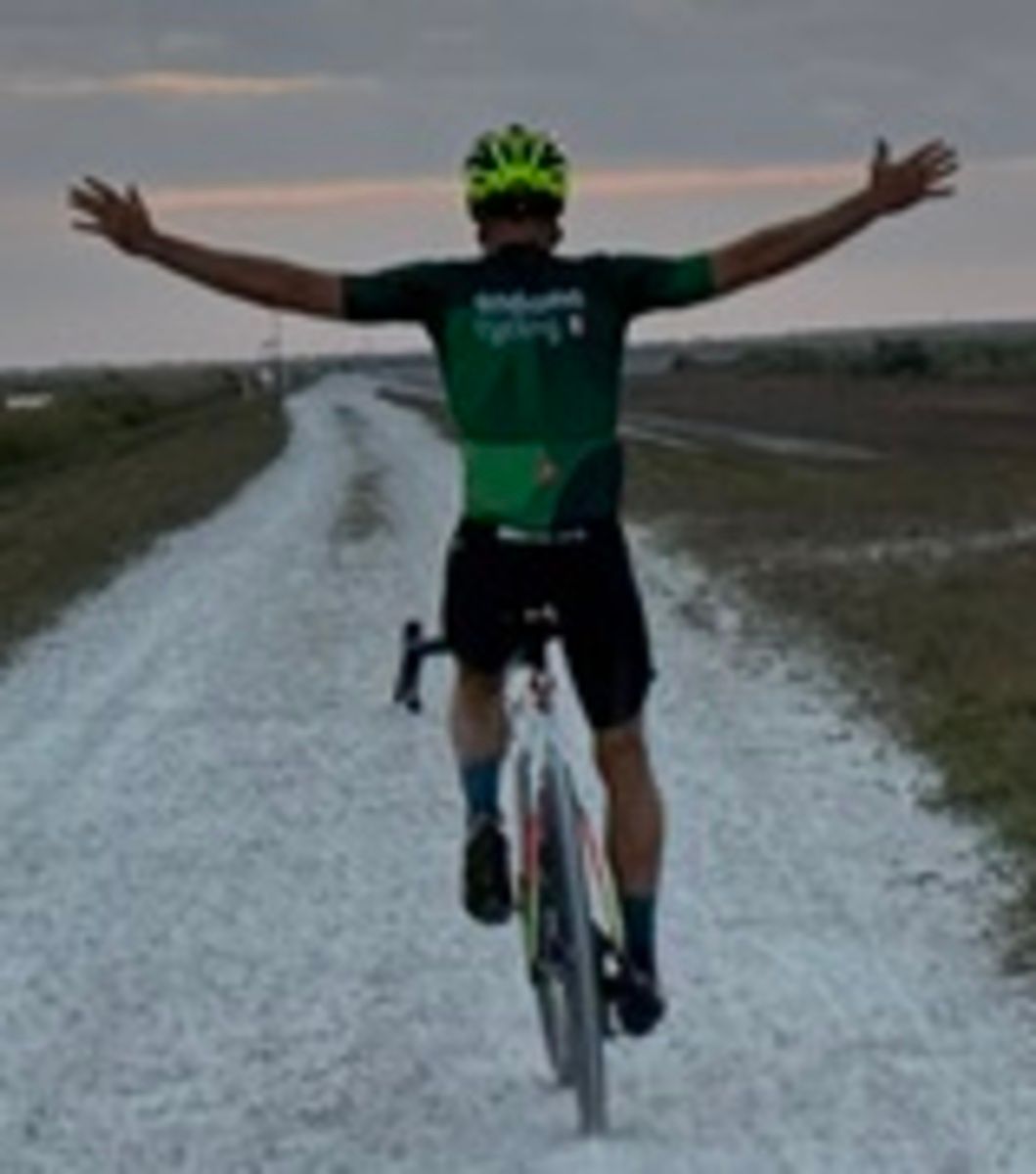
In the sport of road cycling, riders often draft each other in a pace line not too dissimilar to cars stretched out in a NASCAR or formula 1 race. The cyclist up front catches the brunt of the wind, and everyone else behind him or her saves precious energy by tucking into the slipstream. Really strong riders sometimes break-away or “drop” their followers off their wheel. Cycling is a beautiful sport, and the ones who dipped their toes a little deeper understand that it requires one of the hardest efforts a human can physically or mentally exert. Satisfaction does not simply come from the endorphins like in “runners high”. It is more magical. At the end of a long and hard pull when everyone is off your wheel, you become free. Free of worries, free of pain, and free of self-doubt. To many of us cycling fanatics, the chasers are not our riding buddies on a Saturday morning group ride. They are our scars and memories, and we desperately try dropping our ghosts each time we clip in for another punishing effort that can set us free just once more.
What follows is a series of short stories that shaped who I am to the best of my recollection. At age 53, I decided to slow the pace down, stop trying to drop my demons and stare them directly in the eye as they pass me by. Perhaps I should have done this long ago, and it may have led me to more enjoyable routes on roads less traveled with people I love.
Goulash (Gulyas) Communism
I was born in 1972, in Budapest. My parents were young, in their early 20s, so they quickly followed the then popular pattern of moving away from the city, but close enough for a short train ride back to the capital to see grandma on the weekends. I started second grade in a sleepy little town near the Danube Bend, living the Hungarian dream of a small brick home with central heating and metal-paneled fence around the front yard.
Growing up in Hungary during the 70s and 80s had its advantages. They called it the era of “Goulash (Gulyas) Communism”. It was a milder version, more liberal form of an Eastern Block regime that allowed some religious freedom and private enterprise on a small scale. This period started right after the failed 1956 uprising that the Soviets crushed with tanks and AK47s. The results were relative food abundance, decent healthcare, well structured education, and almost no crime. At least, this is how I remember those years. There were some negatives as well. We could not travel freely, not that many people had money to venture out of the country anyway, a badly timed political joke could land you (or your parents) in prison, we all had to learn Russian from the 5th grade on (but no one really did), there was a 10 year waiting list for a new “car” (a caricature of a vehicle assembled somewhere in Russia, East Germany, or Romania), 2 government TV stations with a blackout day on Mondays. Yet, we were happy kids, swimming in the Danube on hot summer days, riding our bikes for fun or grocery trips, and playing soccer on dusty gravel streets. Some of my lucky friends even had their Sinclair ZX Spectrum computers in 1982-83 courtesy of some parental connections in Vienna. Soccer matches turned into early morning bike rides to my best friend’s house to spend all day staring at a black and white TV screen huddled around the magical toy with rubber keypads that looked like Swiss chocolate bars. It was not just a toy though, it introduced us to the Basic computer language and some English words. It was a window to the West.

Sinclair ZX Spectrum 1982
By the mid to late 80s, there was a palpable tension in the air. Something big was gonna happen, but we didn’t fully understand what. I was more in tune with history and politics than the average kid. They called me “ the American” in school, and teachers constantly took a double-take when I passed their classrooms in the hallway. I earned this nickname by being a grandson of a 1956 freedom fighter who emigrated to the US leaving his family (my father, his sister and my grandmother) behind. My father dreamed of following his dad’s footsteps, but his father was not a family man. An occasional christmas letter, and a cheap toy every 5-10 years had to do. Eventually, he stopped hoping and just became another cog in the system as a house painter. I was more stubborn, and I refused to stop dreaming. I listened to Voice of America, a banned radio broadcast from West Germany or Austria sponsored by the US government. If caught, one could face serious harassment or even jail time. I was mesmerized by the stories from my grandmother, the few pictures I saw of New York city, the larger than life cars on the bustling streets, and the supermarkets with magic doors that opened as you approached. One day, I would take my chance, I would cross the ocean and start a new life in that vast land of opportunities. That day came knocking on a bright sunny morning of early 1989.